Responsive scheduling and clear updates
You get a realistic timeline, what is happening next, and who is on site, so the process feels controlled instead of chaotic.
Serving Atlanta, Georgia & surrounding areas
24/7 Emergency Response
Atlanta fire and smoke recovery
Fast, careful recovery for homes and businesses after a fire: emergency cleanup, smoke odor removal, and repair planning with clear communication from the first visit.
Cost planning
Fire damage restoration in Atlanta averages $44,633 for whole-home damage, with local soot removal running $2,010 to $6,010, according to Angi's 2026 Atlanta cost data. That is well above the national average of $27,175, where most projects fall between $3,107 and $51,243 (Angi) and typical cleanup runs $4 to $7 per square foot (HomeGuide).
Published planning figures from Angi's Atlanta cost guide and HomeGuide's national cost study, accessed July 2026. These are planning references, not our quotes; your written scope after an on-site inspection is the real number.
See the Full Cost Guide & EstimatorAtlanta vs. National Planning Figures
| Scope of work | Atlanta | National |
|---|---|---|
| Whole-home restoration (average) | $44,633 | $27,175 |
| Soot removal | $2,010 – $6,010 | $2,000 – $6,000 |
| Typical project range | Varies by severity | $3,107 – $51,243 |
| Cleanup per square foot | — | $4 – $7 |
Sources: Angi (Atlanta & national, 2026) and HomeGuide (national, 2026). Accessed July 2026.
A clear path forward
When a fire happens, the damage is not limited to what burned. Soot spreads, smoke odors soak into porous materials, and water from suppression can create secondary damage. Fire Damage Restoration Atlanta provides fire damage restoration in Atlanta, GA with a practical plan: secure the property, document conditions, remove unsafe debris, clean and deodorize affected areas, and scope repairs so you can move forward.
You will get straightforward answers about what can be cleaned and saved, what needs to be removed, and what the next steps look like. If you are working with an insurance adjuster, we can provide a written scope and photo documentation to support the claim and keep the work organized.
Complete incident recovery
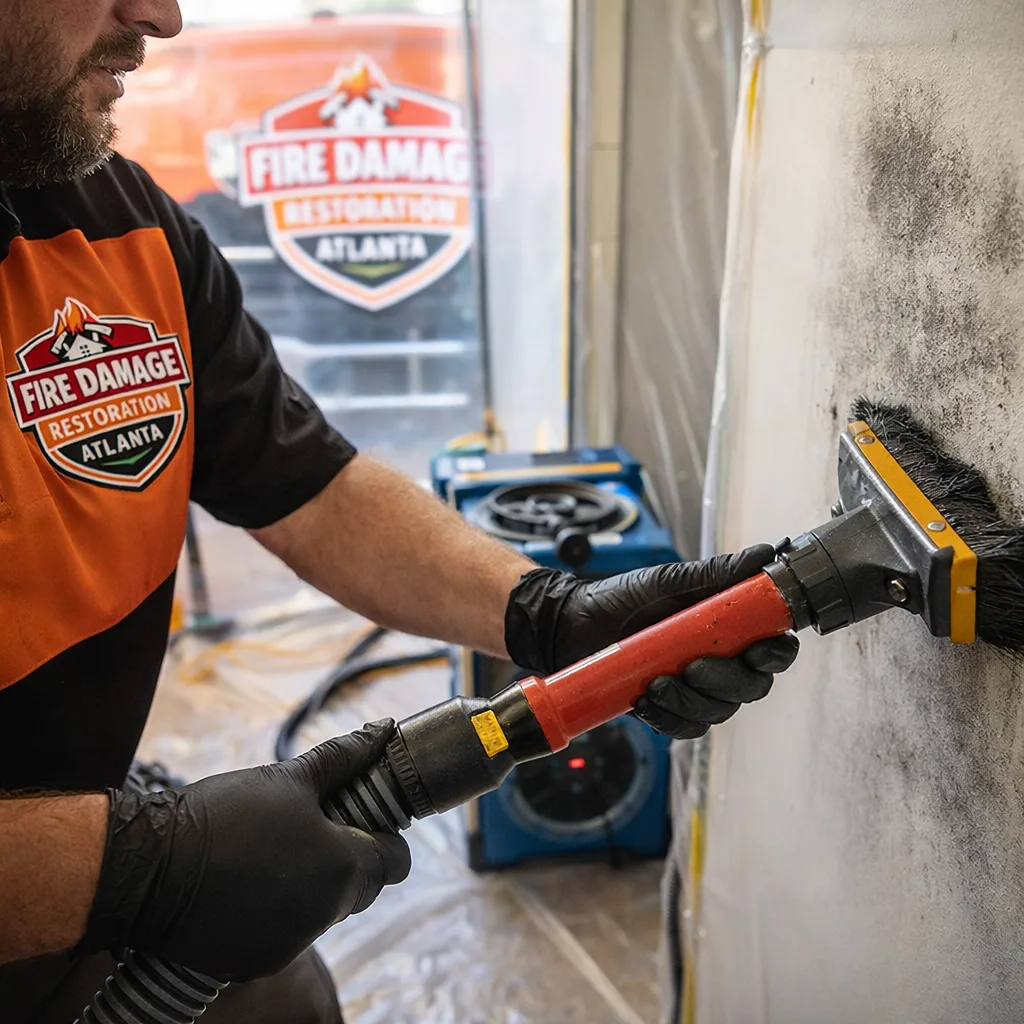
Fire damage restoration includes emergency board-up, debris removal, soot and smoke cleanup, deodorization, drying of water used to put out the fire, and repairs. The work runs as a sequence, because the right order prevents rework and lingering odor.
If you are unsure whether the odor is in contents, HVAC, or building materials, we can trace the sources and recommend the most effective approach.
Request Emergency ServiceOrder in a difficult moment
The work is organized around source removal, controlled conditions, documentation, and practical decisions about what can be saved.
Request Emergency ServiceYou get a realistic timeline, what is happening next, and who is on site, so the process feels controlled instead of chaotic.
We focus on source removal, correct cleaning chemistry, and proper dwell time, then deodorize only after residues are addressed.
Negative air, plastic barriers, and targeted demo help protect the rest of the property during removal and cleaning.
Photo documentation and a written scope help align expectations between the property owner, adjuster, and contractors.
We identify what is salvageable versus replaceable early so decisions on drywall, flooring, cabinets, and trim are made once.
From older intown homes to newer builds in North Metro, we adapt cleaning and repair plans to the materials and layout.
From assessment to repairs
Fire damage restoration follows five steps: inspect and secure the property, remove unsalvageable materials, clean soot and treat odor at the source, dry and monitor moisture, then finalize the repair scope. Each phase prepares the property for the next.
Step 01
We assess affected areas, identify immediate hazards, set containment as needed, and document damage for a clear scope.
Step 02
Controlled demolition and debris removal are performed to expose surfaces that need cleaning and to prepare for drying and repairs.
Step 03
We select cleaning methods by surface and residue type, then address odor sources in building materials and contents.
Step 04
If water was used to put out the fire, we dry materials and monitor conditions so the rebuild is not compromised.
Step 05
You receive a defined plan for repairs, including materials and sequence, so the property can be put back into service.
Focused recovery services
We provide four services in Atlanta: full fire restoration, smoke damage cleanup, water extraction after firefighting, and board-up with roof tarping. Choose the one that matches the damage at your property.
End to end recovery after a fire: stabilization, soot removal matched to the residue type (dry soot from fast fires, oily soot from slow smoldering fires), deodorization, and coordination of repairs.
Targeted cleaning and odor treatment for smoke residue on walls, ceilings, and contents, with the cleaning method chosen by residue type and an emphasis on removing the odor source, not masking it.
Removal of water left behind by fire hoses and sprinklers, with structural drying and moisture monitoring to prevent mold from starting inside wet walls and floors.
Emergency securing of broken windows, doors, and fire-damaged roof sections to keep weather and intruders out while cleanup and insurance work proceed.
Local restoration team
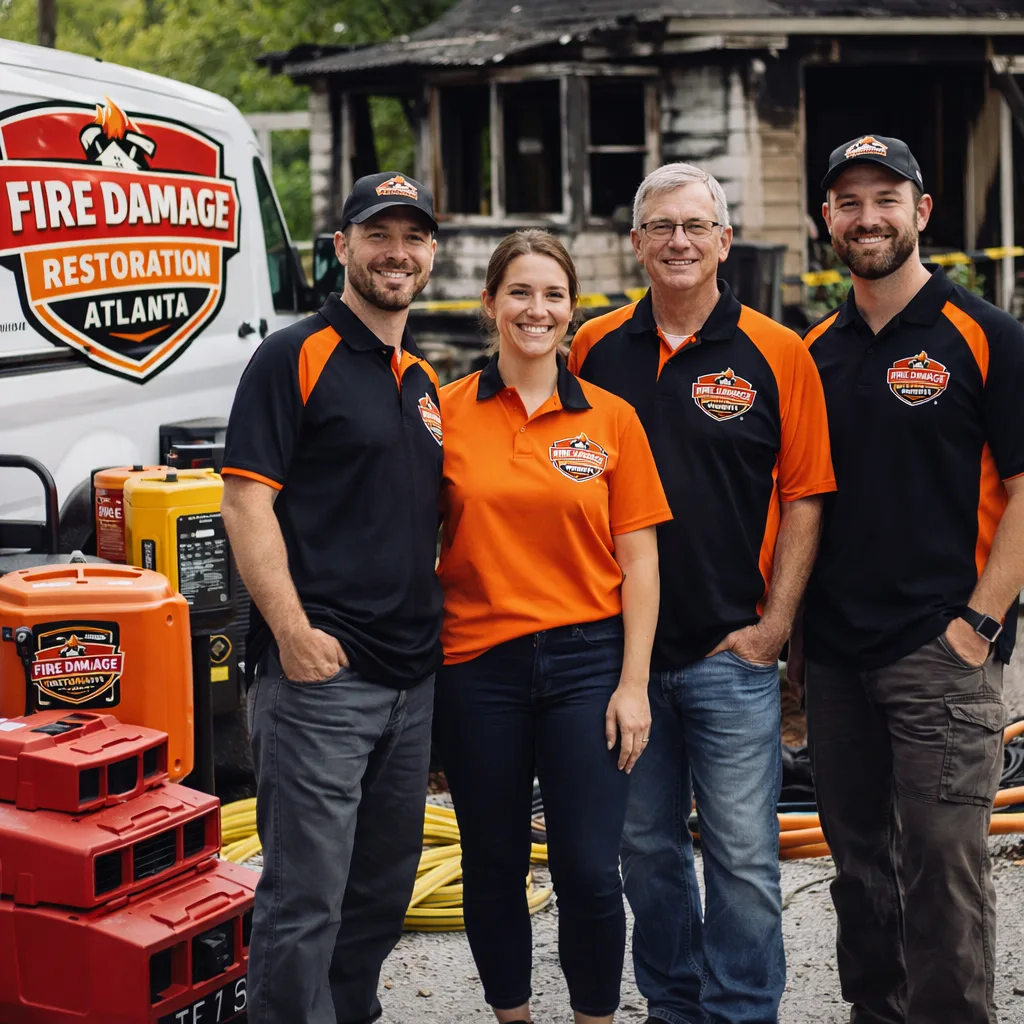
Fire Damage Restoration Atlanta is a local team serving Atlanta, GA with focused fire damage restoration work. Our job is to bring order to a stressful situation and make the recovery predictable: a written plan, careful work practices, and communication that keeps you informed.
We coordinate the practical details that matter after a fire, including protecting unaffected areas, handling debris removal safely, and making sure soot and odor issues are addressed before repairs begin. If you are managing an insurance claim, we can support the process with documentation that matches how claims are typically reviewed.
“They explained what was salvageable and what was not, then kept the work area contained so the rest of the house stayed clean. The smoke smell was gone after the cleaning and treatment plan was finished.”
“Communication was the biggest help. We always knew what was happening next and what decisions we needed to make for repairs.”
Atlanta and surrounding communities
We serve the City of Atlanta and surrounding metro communities, including Decatur, Sandy Springs, Marietta, Smyrna, East Point, and College Park. Different parts of the metro have different housing styles and access needs, so we plan staging, containment, and debris removal accordingly.
Request Emergency ServicePractical answers
What homeowners and property managers commonly need to know before cleanup begins.
Scheduling depends on the severity and safety conditions, but we prioritize urgent situations where the property needs securing, debris removal, or odor control to prevent further damage. Share what happened and what areas were affected, and we will confirm the next available inspection window and what to do until we arrive.
Smoke odor can usually be removed when the residue and odor sources are fully cleaned or removed, then deodorization is applied to the right materials. The key is identifying where the odor lives, such as insulation, framing cavities, textiles, or HVAC components, and treating those sources instead of masking the smell.
Yes, we can provide photo documentation and a written scope of work that helps support the claim and keeps expectations aligned. You remain in control of decisions, and we can answer technical questions about cleaning methods, demolition needs, and repair sequencing.
Price is driven by the extent of soot and smoke spread, what materials are salvageable, how much controlled demolition is required, and whether water damage drying is needed. After an inspection, you should expect a clear scope that separates cleanup, odor work, and repairs so you can see what is included.
It depends on the affected areas and air quality conditions, especially if bedrooms, kitchens, or HVAC were impacted. After the inspection we can advise on containment plans and whether temporary relocation is the safer option during demolition, cleaning, and deodorization.
Secure the property if it is safe, avoid disturbing soot on surfaces, and limit HVAC use if smoke affected vents or returns. If utilities are compromised, keep power and gas safety as the priority and wait for qualified professionals before restarting systems.
Start with an on-site assessment
Tell us what happened and what areas were affected. We will schedule an on site assessment, provide a written scope, and lay out a clear path from cleanup to repairs.