Safety and stabilization first
We start by identifying hazards like compromised framing, damaged wiring, and unstable materials. Boards, tarps, or temporary barriers are handled before detailed cleaning begins.
Serving Atlanta, Georgia & surrounding areas
24/7 Emergency Response
Fire and smoke recovery · Atlanta, GA
One coordinated plan for emergency stabilization, smoke and soot cleanup, odor control, insurance documentation, and repairs.
One accountable restoration plan
After a fire in Atlanta, do three things first: keep everyone out until the structure is cleared, call your insurance carrier to open a claim, and get the property secured with board-up and tarping. Once Atlanta Fire Rescue releases the scene, Atlanta fire and restoration work can begin: the structure made safe, smoke and soot controlled, and a plan you can hand to insurance.
Fire Damage Restoration Atlanta provides a single point of responsibility for the fire restoration process in Atlanta, GA. That typically includes emergency stabilization, contents handling, soot and odor removal, and coordinating repairs that meet adjuster and building requirements.
Atlanta properties often mix older materials with modern finishes, and smoke behaves differently in each. Soot can stain and corrode surfaces, odors can soak into porous materials, and water used to put out the fire can create secondary damage. The right response is a measured sequence, not a quick wipe down.
If you also need a broader overview of what a restoration contractor does after a loss, start with Fire Damage Restoration.
Detailed cleanup and recovery
Structurally sound framing, masonry, many hard-surface finishes, and most non-porous contents can usually be cleaned and restored after a fire; charred framing, melted plastics, and heavily smoke-saturated porous materials usually cannot. Fire losses rarely stop at the room that burned. Heat, soot, and smoke travel, and HVAC systems can spread odor and fine particles.
Kitchen fires often require extra attention around ductwork and the range hood because grease residue can bind smoke particles and keep odors persistent.
Request Emergency Service
Disciplined work standards
Careful containment, methodical cleaning aligned with IICRC fire and smoke restoration standards, and documentation should guide every phase. Our Atlanta fire damage restoration team works to that standard on every loss.
We start by identifying hazards like compromised framing, damaged wiring, and unstable materials. Boards, tarps, or temporary barriers are handled before detailed cleaning begins.
Plastic sheeting, negative air, and controlled pathways help keep soot from spreading into unaffected rooms, especially in occupied homes and multi-unit buildings.
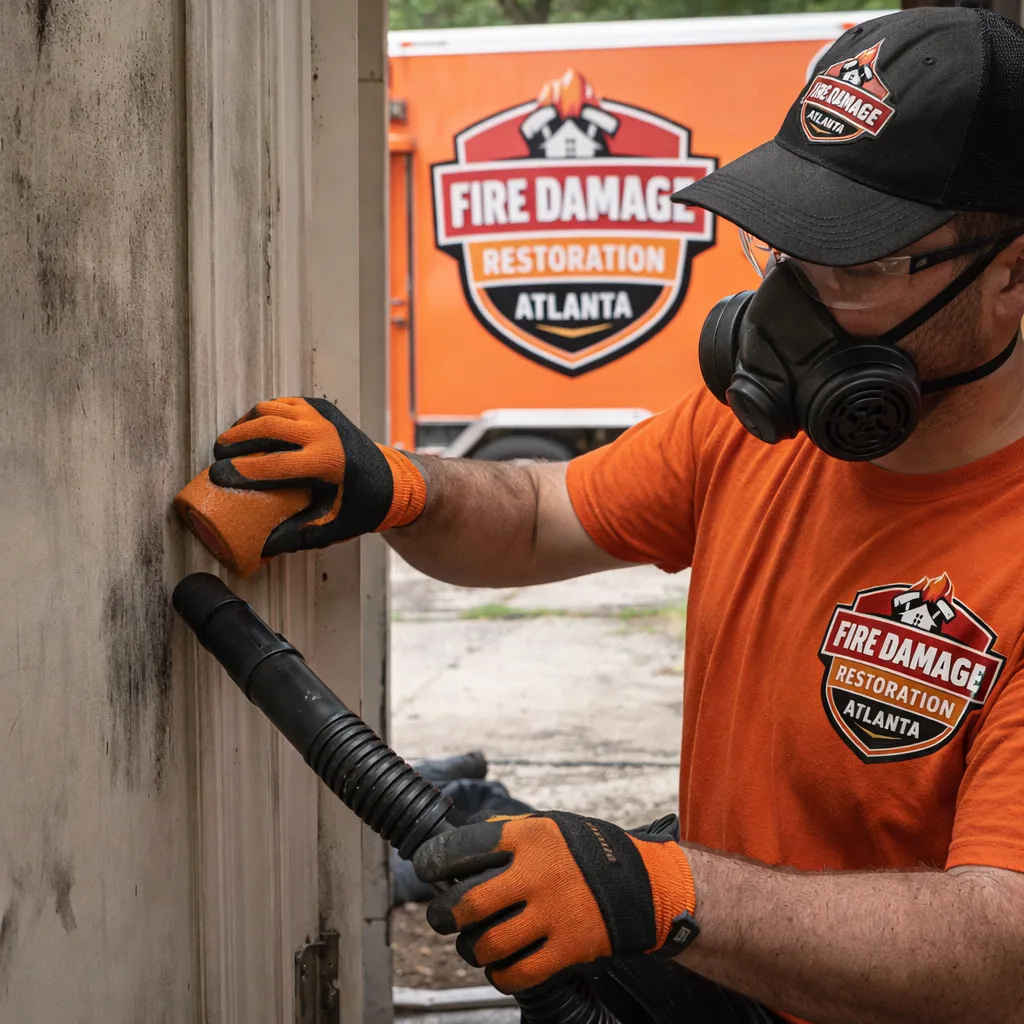
HEPA air scrubbers and vacuums reduce airborne particulate during cleaning and demolition so restoration work does not create a second mess.
Dry sponge cleaning, alkaline cleaners, and controlled wet cleaning each have a place. Methods are chosen by surface and soot profile to avoid further finish damage.
Photos, moisture readings when water is involved, and line-item scope notes help organize the claim and support technical discussions with your adjuster.
Restoration continues until the property reaches pre-loss condition or the agreed scope. Rebuild steps are coordinated so you are not left managing multiple trades alone.
Assessment through closeout
The process runs in six phases: rapid assessment, structural stabilization, soot removal, odor source treatment, drying, then repairs and closeout documents. Each phase prepares the property for the next.
Step 01
We document the loss, identify immediate hazards, and set expectations for access, utilities, and what can be saved. Occupied homes receive a containment and safe-pathway plan first.
Step 02
Openings, damaged sections, and unsafe materials are addressed so the property is protected from weather and unauthorized entry during the work.
Step 03
Loose soot is removed with HEPA methods before surfaces are cleaned using the least aggressive effective approach, including walls, ceilings, cabinetry, trim, and affected mechanical areas.
Step 04
Contaminated porous materials and residue are removed or cleaned before targeted deodorization is selected according to where odor remains.
Step 05
When water was used to extinguish the fire, moisture is monitored and building materials are dried to reduce swelling, warping, and microbial growth.
Step 06
We coordinate repairs and finishing, complete a final walk-through, and provide documentation for your claim file and future property records.
Job-specific planning
Fire damage is always personal, but the building type changes containment, test cleaning, drying, and repair decisions.
In multi-unit properties, smoke can migrate through shared walls and ventilation. Containment, negative air, and controlled pathways help protect clean or occupied spaces.
Natural stone, custom cabinetry, and specialty paint often require test cleaning to avoid etching or sheen changes while removing soot.
Homes with multiple renovations can contain concealed voids and chases that trap odor, making selective opening and sealing decisions more important.
Clear daily cleanup standards, scope notes, photographs, and moisture readings help homeowners and adjusters follow the same recovery plan.
Atlanta service area
Across Atlanta, building materials, shared systems, site access, and summer humidity can change the safest cleanup and drying plan.
Request Emergency ServiceCustomer experience
“The smoke smell was the worst part. They explained what had to be removed versus what could be cleaned, set up containment so the rest of the house stayed usable, and the documentation made our adjuster visit straightforward.”
“We thought it was only the room that burned, but soot was everywhere. Their crew showed us where residue had traveled, cleaned in a clear sequence, and the final walk-through felt thorough.”
Practical answers
Answers about starting work, smoke odor, insurance documentation, timing, and what to do before the crew arrives.
Most jobs start with an urgent assessment and stabilization as soon as access is allowed because soot and odor can set into porous materials quickly. Timing depends on safety clearance, utility status, and whether the fire department has released the structure. The first visit focuses on documentation, containment planning, and preventing further damage.
Smoke damage cleanup focuses on soot removal, cleaning, odor control, and air-quality measures such as HEPA filtration. Full fire restoration also includes selective demolition, structural repairs, and finishing work. Many Atlanta losses need both because even a small fire can push soot into adjacent rooms and HVAC pathways.
Sometimes, but only after inspection and test cleaning because odor can be trapped in insulation, charred studs, and porous drywall paper. If odor-source material remains, treatments such as fogging may only mask it temporarily, and the smell can return as the home warms or humidity rises.
Yes. We can coordinate with your adjuster by providing photos, notes, and a clear scope of work that matches restoration standards. Documenting affected and concealed areas while separating cleaning, demolition, and rebuild items makes approvals easier to track.
The timeline depends on the size of the affected area, how far soot traveled, and whether water damage is involved. Work usually moves through stabilization, cleaning and deodorization, and then repairs. Rebuild time is affected by material lead times and how much reconstruction is needed after cleaning and drying.
Prioritize safety and follow fire department guidance. Avoid disturbing soot because it spreads easily. If it is safe and allowed, limit HVAC use, close doors to affected rooms, and take photos for your claim before moving items. Avoid DIY cleaning on walls or ceilings because the wrong cleaner can set staining or smear residue into paint.
Get a written scope before work begins
Tell us what happened, what areas are affected, and whether water was used to put out the fire. We will lay out the safest next steps, the expected timeline, and the documentation your insurance claim will need.
A clear sequence protects your property and helps keep the claim organized before demolition or painting starts.