Step 01
On-site assessment and safety check
We inspect affected areas, note structural concerns, identify soot type, and determine immediate stabilization needs. Unsafe power or gas conditions are prioritized before work begins.
Serving Atlanta, Georgia & surrounding areas
24/7 Emergency Response
Fire restoration · Atlanta, Georgia
Fast cleanup, careful smoke and soot removal, and one organized plan that moves your property from stabilization through completed repairs.
Cleanup through reconstruction
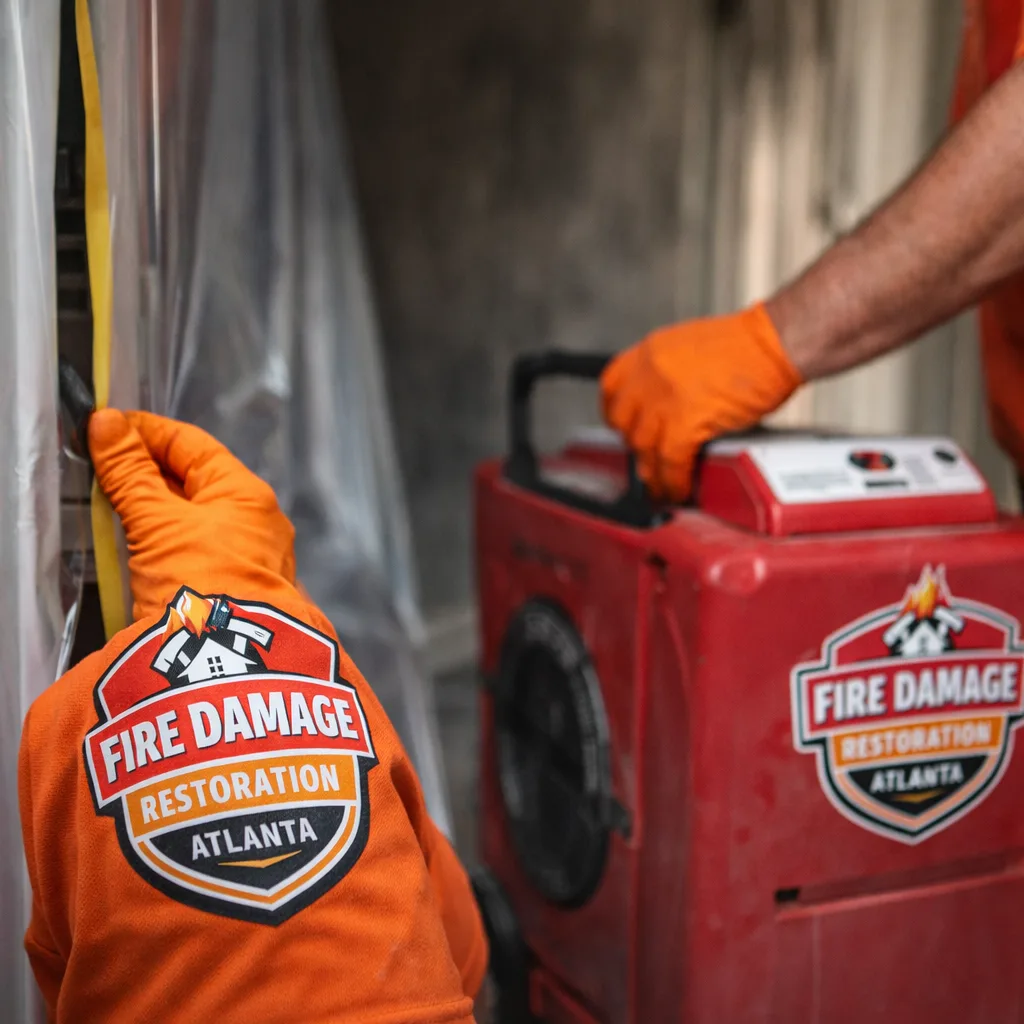
Fire restoration in Atlanta covers emergency stabilization, soot and smoke cleanup, odor removal, structural drying, and full repairs, handled as one continuous scope. If you are searching for fire restoration Atlanta GA, you probably need two things quickly: the damage stopped from getting worse, and a plan that takes you from cleanup to repairs.
Fire restoration is not only removing burned material. It also includes safety and stabilization, soot and smoke residue cleanup, odor source removal, selective demolition, contents handling, and repairs that make the space usable again.
Atlanta properties vary widely. Older intown homes can have layered materials that hold odor, while newer buildings often have tighter envelopes where smoke lingers in HVAC returns and attic insulation. The right approach depends on the fire source, how long smoke circulated, and what heat and suppression water did to the structure.
Fire Damage Restoration Atlanta provides Atlanta fire restoration with a written scope and a step-by-step plan, not vague promises.
Residue and odor control
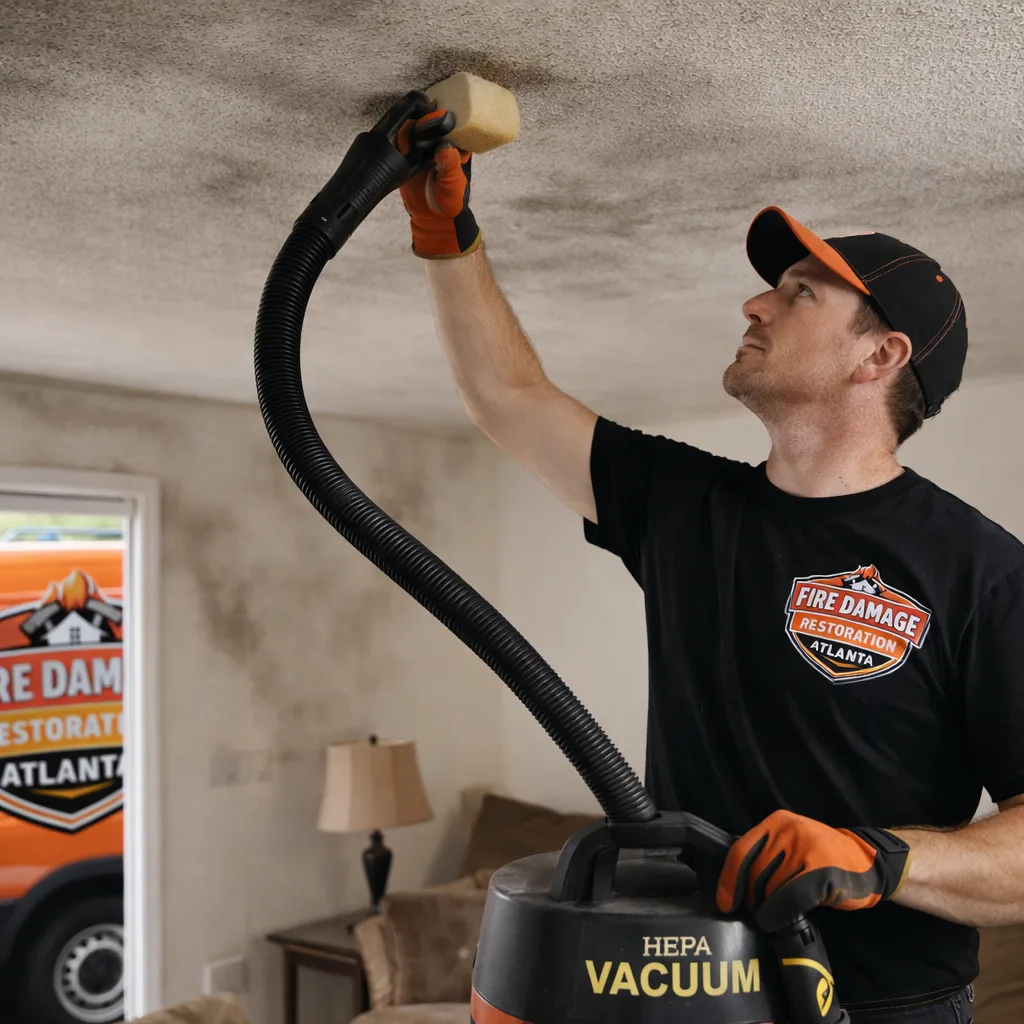
Soot is cleaned with dry methods first (HEPA vacuuming and dry sponges), then controlled wet cleaning with chemistry selected for the residue. Dry soot from fast-burning fires and oily residue from slow smoldering fires need different handling. Dry soot, oily residues from plastics, painted drywall, framing, and masonry each require different handling.
Odor work starts with source removal. After cleaning, treatment may include hydroxyl, targeted fogging, or ozone only when the building is unoccupied and the method is appropriate.
If smoke entered the supply and return system, we identify where residues are sitting so the smell does not keep cycling through the property.
Removal and salvage decisions
Charred drywall, insulation, cabinetry, flooring, and warped materials that cannot be restored are removed under controlled conditions. Structurally sound framing can often be cleaned, sealed, and prepared for reconstruction.
Many household items can be restored, but not everything should be. We help identify what is salvageable, then support pack out, inventory, cleaning, and storage while the building is restored.
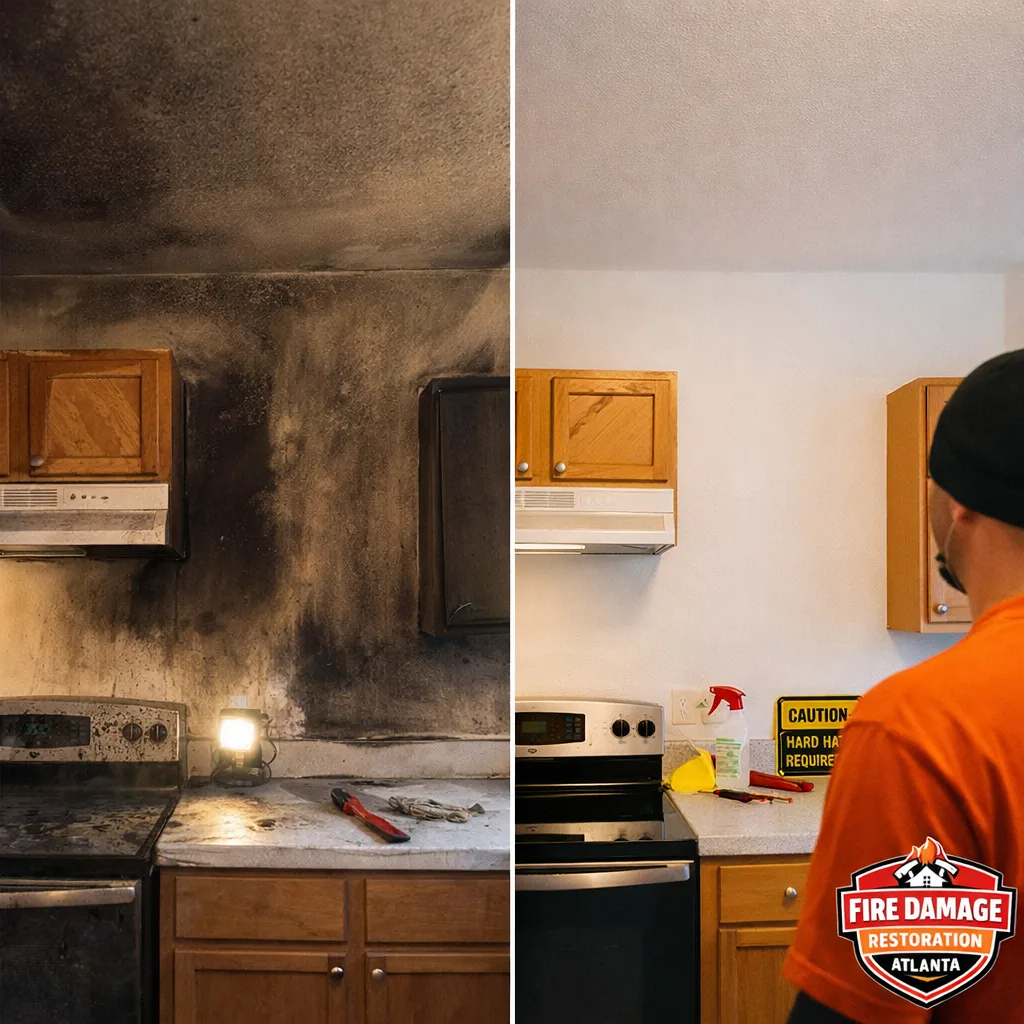
One coordinated scope
When cleanup and deodorization are complete, the work moves into drywall, paint, trim, flooring, cabinetry, and finishing details.
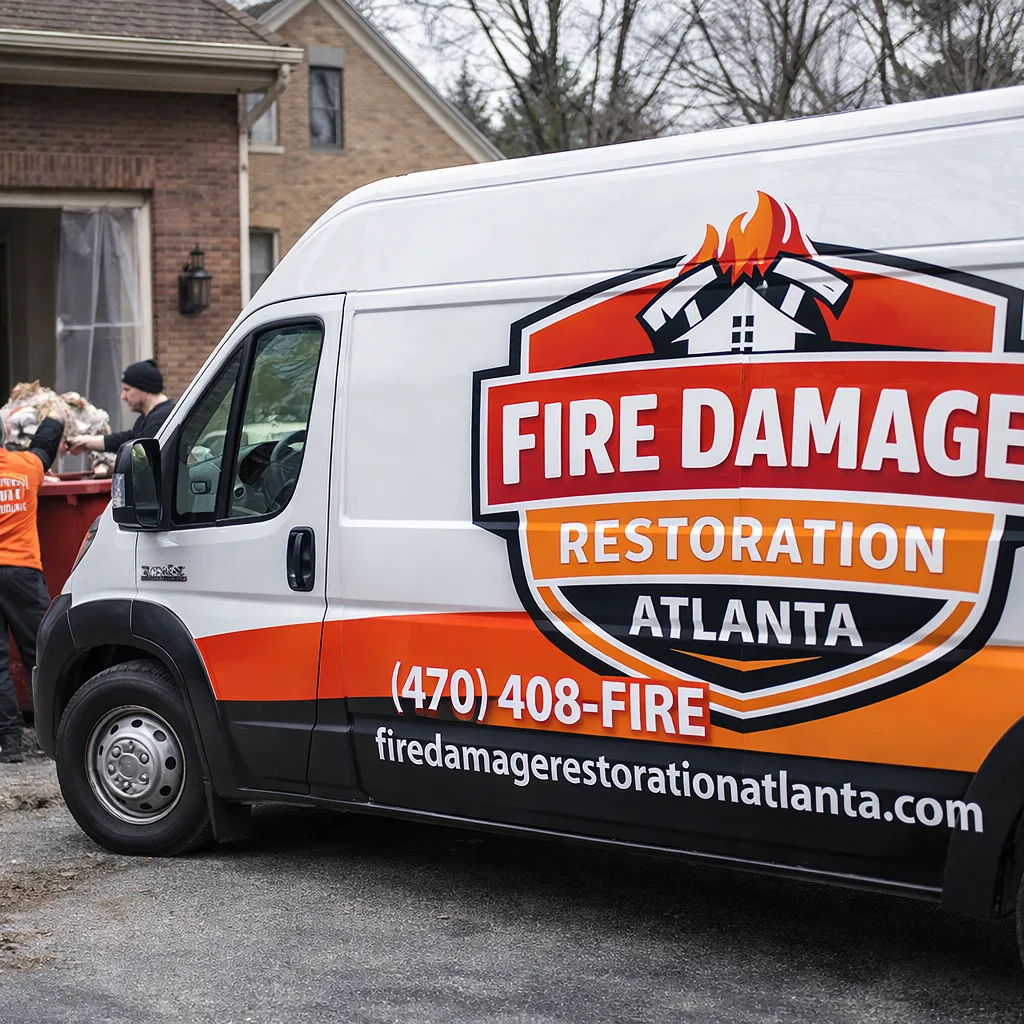
Keeping cleanup and reconstruction under one written plan reduces handoff delays and scope confusion. The final walkthrough confirms that surfaces, odor treatment, and finish work match the agreed scope.
Assessment to final walkthrough
Fire restoration in Atlanta GA runs in five steps: on-site assessment, written scope, containment and initial removal, cleaning and deodorization, then repairs and final walkthrough. Each phase prepares the property for the next.
Step 01
We inspect affected areas, note structural concerns, identify soot type, and determine immediate stabilization needs. Unsafe power or gas conditions are prioritized before work begins.
Step 02
The plan separates what will be cleaned, removed, and rebuilt. It also outlines access needs, occupancy limitations, and the order of operations.
Step 03
We isolate the work area, establish filtration and negative air when appropriate, and remove unsalvageable debris and porous materials driving soot transfer and odor.
Step 04
Surfaces are cleaned with methods suited to the residue and material. Odor treatments follow cleaning, with attention to closets, insulation, contents, and HVAC pathways.
Step 05
We complete the agreed repairs, confirm surface and odor conditions, and walk through the finished work so nothing is left vague.
Controlled work, clear decisions
The work is organized around containment, source removal, documentation aligned with IICRC restoration standards, and a defined path into repairs, backed by our full-service fire damage recovery in Atlanta.
Poly barriers, negative air, and HEPA filtration help keep soot from moving into unaffected rooms and shared corridors.
Dry chemical sponges, HEPA vacuuming, and wet methods are selected for the soot and the surface—not applied as a one-method-fits-all treatment.
Conditions, salvage decisions, and changes are documented so property owners and insurance adjusters can understand what is being done and why.
One coordinated scope reduces delays between demolition, cleaning, odor treatment, and reconstruction.
Atlanta and surrounding areas
Access, building materials, HVAC layout, and Atlanta humidity all affect containment, drying, odor removal, and reconstruction sequencing.
Customer experience
“After a small electrical fire, the smoke smell was everywhere and the walls felt grimy. The crew explained what could be cleaned, what had to come out, and the order they would rebuild. The odor work actually solved the problem, not just covered it up.”
“They kept the work area sealed off and the rest of the house stayed livable. The scope was clear, and the repairs matched the existing trim and paint better than I expected.”
Practical answers
What homeowners commonly need to know before cleanup, deodorization, and reconstruction begin.
Start time depends on safety access and whether the property is cleared for entry. The first goal is to stabilize conditions and contain soot transfer as soon as access allows, beginning with utility and structural safety, containment, debris removal, and air filtration.
Cost depends on affected square footage, soot type, smoke spread, suppression water, contents work, and reconstruction needs. A contained incident may require mostly cleaning and deodorization, while a larger loss can include demolition, pack out, and rebuild. An on-site assessment is needed for a written scope.
In most situations, yes, but lasting odor removal requires finding and addressing the source first. Odor-holding insulation, porous drywall, soft contents, or HVAC residues may need cleaning or removal before deodorization can be effective.
Keep the property secured, avoid disturbing soot, and limit HVAC operation if smoke entered the system. Do not run fans that could blow residue into clean areas. Preserve photos and timeline details because they help establish the restoration scope.
Yes. The project can be managed from initial cleanup through repairs, including selective demolition, soot cleaning, odor treatment, drywall, paint, trim, flooring, and other finishes defined in the agreed scope.
Timing depends on affected area, removal needs, contents handling, drying, and reconstruction. Cleaning and deodorization may take days for smaller losses, while multi-room projects with structural repairs can take weeks. The assessment establishes a realistic sequence and schedule.
Start with a clear assessment
Tell us what happened and which areas were affected. We will assess the damage, explain what can be restored versus replaced, and provide a written scope that moves the job from cleanup to completed repairs.